Sectional vs Modular Sofa: What Is the Difference? (October 2026)
The sectional vs modular sofa difference is layout flexibility: a sectional combines seating sections, while a modular sofa uses units designed for different arrangements. A sofa can be both, so choose by its supported layouts, room fit and connections.
On this page (9 sections)
- Sectional vs modular sofa: what is the difference?
- Which sofa is better if you want to change the layout?
- Which one fits your room better?
- Which of these sofas suits your household?
- How do setup and moving differ?
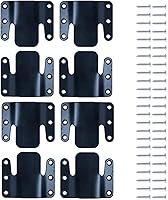
- How do the pieces stay together?
- How should you care for sectional and modular seating?
- What mistakes should you avoid before ordering?
- Which sofa should you choose?
The sectional vs modular sofa difference is flexibility: a sectional combines seating sections, while a modular sofa uses units designed for different arrangements. A sofa can be both, so the label alone won't tell you how it fits your home.
Choose around the layout you'll use daily, the changes you'll realistically make and the route into your room. Then compare seat shape, connections and care needs before choosing upholstery or color.


Sectional vs modular sofa: what is the difference?
A sectional describes seating made from joined sections; modular describes pieces designed to work in different arrangements. A modular sectional combines both ideas.
A traditional sectional may have a set L-shape or U-shape. Its sections can sometimes separate for delivery, yet still need to return to the same positions.
Modular seating may let you swap a chaise position, split the sofa into smaller groups or use a seat on its own. The available changes depend on the arms, backs, corner pieces and connectors.
Don't confuse a reversible chaise with full modular freedom. A sofa that switches its chaise from left to right may still have only 2 supported layouts.
What should you check in a sectional vs modular sofa comparison?
Check which pieces can move and where they can go. A loose ottoman offers useful flexibility, but it doesn't prove every seat can change position.
Ask whether each separate unit has a finished side, a usable back and compatible connection points. A corner seat can limit your options because its shape may work poorly in the middle of a straight sofa.
Our guide to what makes a sectional modular explains these parts. For the broader choices, the complete sectional sofa guide covers shapes and seating styles.
Which sofa is better if you want to change the layout?
A modular sofa suits homes where seating needs change; a fixed-layout sectional suits a room with one clear furniture plan. Buy flexibility for a specific use rather than a possible future you haven't planned.
Renters may benefit from units that can form a different shape after a move. In a shared living room, separate seating groups can also help when people want to talk rather than face the television.
A settled household may get more use from a sectional that fits one corner well. If you always lounge in the same place, extra layout choices may add little.
Write down your 2 most useful arrangements before shopping. If both depend on moving an ottoman, you may not need a sofa with fully rearrangeable seats.
Who should skip a modular sofa?
Skip modular seating if you won't move the pieces or have nowhere to put spare units. Splitting a sofa helps only when the room can accommodate the pieces separately.
Frequent changes also mean releasing connections, lifting sections and reconnecting them. Choose a layout you can manage safely, especially if rearranging would be a solo job.
When does a fixed sectional make more sense?
A fixed sectional makes sense when one arrangement already meets your needs. It can define a television area or divide an open room without needing regular changes.
Skip a strongly handed design if your next room may need the chaise on the opposite side. Check orientation from the manufacturer's diagram rather than guessing from a staged photo.
Which one fits your room better?
The better fit is the sofa whose whole footprint leaves the room usable. A modular label doesn't make a wide sofa compact.
Measure total width and depth, including the chaise or ottoman in its normal position. Mark the shape with painter's tape, then walk through the room as you would while carrying laundry or serving guests.
Check door swings, drawer access, floor vents and the route between seating and the room's exit. A sofa can fit against the wall while still making the room awkward to use.
For alternate modular layouts, mark each arrangement you expect to use. Moving a seat away from the main sofa may open one path while blocking another.
Korser gives conflicting overall dimensions, including widths of 106.3 and 110 in, so confirm its complete footprint before ordering. ROWHY measures 34.3 in deep, 112.2 in wide and 33.5 in high, but you should also map where its ottoman will sit.
Use the sectional sofa dimensions guide to plan measurements and delivery access. For placement ideas, see how to arrange a sectional sofa.
Does deeper seating suit everyone?
Deep seats favor lounging, while a shallower usable seat can make upright sitting easier. Compare where your feet land and whether you need a back cushion to avoid perching on the edge.
Seat height matters just as much. If standing from low furniture is difficult, prioritize a height you already find comfortable rather than choosing by a soft-looking photo.
Which of these sofas suits your household?
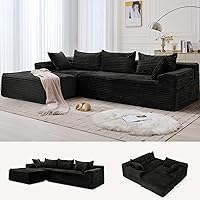
Korser suits frequent rearranging, ROWHY suits movable footrest layouts, and Furmax suits a planned sectional seating area. Their differences show why construction details matter more than category names.
These are examples of different buying priorities. Furmax's alternate configurations aren't established here, so don't choose it on the assumption that it offers the same flexibility as the other 2.
Korser: for low, casual seating you can rearrange
Choose Korser if you want 3 independent pieces that can work together or separately. Its armless seat can serve as a standalone chair, which helps when guests need seating away from the main group.
The 30.08 in seat depth and 14 in seat height make this a choice for low, stretched-out lounging. Skip it if you prefer upright seating with your feet close beneath you or need a higher seat for easier standing.
Corduroy upholstery and side pockets suit a casual television area. The seat cushion covers aren't removable, so choose it only if surface care fits your household's needs.
ROWHY: for sharing a movable footrest
Choose ROWHY if ottoman placement is the change you'll use most. You can move the footrest to a different seat or use the supported chair, loveseat and L-shaped arrangements.
Its seats have 24 in of depth, with foam cushions over wood and metal frame construction. ROWHY gives a capacity of 250 lb per seat, so compare that limit with how each seat will be used.
Skip this sofa if you're arranging delivery and assembly alone without help. The ottoman also needs a planned parking spot so it doesn't become an obstacle between the sofa and nearby furniture.
Furmax: for a room with one seating plan
Consider Furmax if you want chenille upholstery, a wood frame and high-density sponge cushions for one defined seating area. Its appeal here is those construction features rather than confirmed rearranging options.
Furmax gives conflicting information about removable cushion covers. If washable covers decide your purchase, get clear care instructions before choosing it.
Also confirm the full dimensions and intended arrangement. Skip it if you need verified standalone seats, frequent layout changes or a confirmed pull-out bed mechanism.
How do setup and moving differ?
Assembly and delivery depend on the specific sofa, not its sectional or modular label. Compare package sizes, handling needs and unpacking time before scheduling help.
Korser needs no tools or screws for setup. Its vacuum-packed pieces need 24 to 48 hours to regain their shape, according to Korser.
ROWHY ships in 3 packages that may arrive separately. ROWHY estimates about an hour of assembly with 2 to 3 people, so wait until all components arrive before clearing a large work area.
Furmax ships in 2 packages, which can also arrive at different times. Furmax estimates 20 minutes for assembly and about 48 hours for its compressed cushions to regain their shape.
Measure the narrowest doorway, stair turn and hallway on the delivery route. Compare those measurements with package dimensions and the largest rigid component, not just the completed sofa.
Keep hardware and instructions together as you unpack. Set pieces close to their final positions before connecting them, and follow the unpacking directions to avoid cutting upholstery.
For future moves, photograph the connections and label loose hardware by section. Don't drag a joined sofa by one module, since that can put strain on its connections.
How do the pieces stay together?
Compatible connectors keep sections aligned, but you need to understand how they engage and release. A modular sofa should be practical to join as well as rearrange.
Korser has built-in component connectors. ROWHY and Furmax require connector installation, so include that step rather than simply placing their pieces side by side.
Before moving any connected sofa, check for brackets, clips or other joining hardware. Release connections as instructed rather than pulling until the pieces come apart.
If sections shift, first check alignment and whether each connection is fully engaged. Uneven floors or pieces positioned at different angles can interfere with a secure join.
Our guide to connecting a sectional couch covers connection steps. For movement during daily use, read how to keep a sectional couch together.
How should you care for sectional and modular seating?
Follow the upholstery care label and clean between sections regularly. Modular construction can improve access, but it doesn't make fabric washable or stain-resistant.
Vacuum seams, cushion gaps and the floor beneath accessible sections. Use an attachment suitable for upholstery, and keep connector areas clear of debris.
Blot spills promptly instead of rubbing them across the fabric. Use only a cleaning method allowed by the care instructions, and check it on a hidden area first.
A zipper doesn't automatically mean a cover can go in a washing machine. Confirm the method, drying instructions and whether removal is allowed before taking covers off.
Keep eating habits, pets and children's activities in mind when choosing fabric care requirements. Easy access between modules helps with crumbs, while removable, washable covers address a different problem.
Inspect connections after a layout change. If cushions can be rotated or repositioned under the care instructions, doing so can spread everyday use across more than one favorite spot.
What mistakes should you avoid before ordering?
Avoid buying for the name or photo alone. Most costly mismatches come from dimensions, orientation and assumptions about what the pieces can do.
- Counting positions instead of usable seats: a corner or chaise may not give each person the same upright sitting space.
- Ignoring the spare-piece problem: a removed module still needs a place in your home.
- Treating a flat arrangement as a sleeper bed: cushions pushed together don't establish a bed mechanism or suitability for regular overnight use.
- Assuming future expansion: extra matching modules may not remain available, and different collections may use incompatible connectors.
- Choosing washable covers without care instructions: removal and machine washing are separate features.
- Measuring only the wall: delivery turns and walking paths can rule out a sofa that fits the wall length.
If overnight guests are a main reason for buying, compare a purpose-built option in our guide to sectional sofas with a pull-out bed. Don't let a casual lounging arrangement stand in for a sleep setup you need regularly.
Which sofa should you choose?
Your sectional vs modular sofa decision should follow the change you need: choose modular units for meaningful layout changes, or a fixed-layout sectional when one arrangement already works.
Choose Korser for independent pieces and low lounging. Choose ROWHY when moving the ottoman and changing seating groups are useful, and consider Furmax when one planned sectional arrangement is enough.
Before ordering, confirm the footprint, delivery route, connections and care method. For a final buying checklist, use our sectional sofa buying guide.
Product references
- Korser 110 L-Shaped Modular Sectional: See it on Amazon
- ROWHY 112 Modular Cloud Sectional: See it on Amazon
- Furmax Chenille Sectional Couch: See it on Amazon
Frequently asked questions
Is every sectional sofa modular?
No. A sectional joins seating sections, but those sections may fit together in only one arrangement.
A modular sofa has units designed for different layouts.
Before buying, check whether corner seats, arms and connectors allow the changes you want, rather than assuming every separate piece can go anywhere.
Can a modular sofa work as a sectional?
Yes. Modular units arranged together in an L-shape or another joined layout can function as a sectional.
Their extra value is the ability to change that arrangement when the design allows.
Check which units can stand alone and whether exposed sides are finished for separate use.
Which is better for a small living room?
The sofa with the smaller usable footprint is better, regardless of its label. Modular seating helps when you can remove or relocate a unit, but extra pieces still need somewhere to go.
Mark the everyday layout on your floor and leave clear routes to doors, windows and nearby furniture.
Do modular sofas stay connected?
Modular sofas can stay joined when their connectors are engaged correctly, but connection methods vary. Check which pieces attach, how the hardware releases and whether the modules need support from adjacent seats.
Our guide to keeping a sectional couch together explains ways to reduce unwanted movement.
Can you separate a sectional sofa?
Many sectionals separate for moving, but that doesn't mean their pieces work as standalone seats. Follow the release instructions before lifting or pulling a section, and check for exposed hardware afterward.
Our guide on how to separate a sectional couch explains the connection points to inspect first.