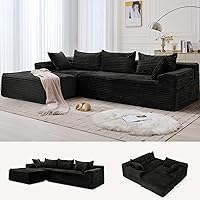
Sectional Sofas: The Complete Buying Guide
Choose a sectional sofa that fits your room, sitting style and delivery route. Measure the full footprint, keep walking paths clear and choose features that solve a daily need, such as flexible seating or hidden storage.
On this page (11 sections)
- What type of sectional sofa fits your room?
- How do you measure a sectional sofa?
- Which sectional sofa features matter most?
- Which sectional sofas suit different needs?
- How should you compare sectional sofas?
- Is a sectional sofa right for a small living room?
- How should you set up a sectional after delivery?
- How do you care for a sectional without damaging the fabric?
- What common sectional-buying mistakes should you avoid?
- What should you check before ordering a sectional?
- How do you choose the right sectional sofa?
Choose a sectional sofa by room fit first, sitting comfort second and useful features third. A chaise, extra-deep seat or storage ottoman earns its space only if you'll use it without crowding the room.
Start with the people who sit there most often. A household that stretches out for movies needs a different shape from one that uses the living room for upright conversation.
This guide explains how to compare layouts, measure correctly and choose among four options with different strengths. For a quick list of models, browse our sectional sofa picks.
What type of sectional sofa fits your room?
Choose a layout that supports the room's main activity and keeps its busiest path open. An L-shape creates one extended lounging area, while a U-shape brings seating around more sides of a central space.
“Modular” describes how the sofa is built, rather than one particular shape. Modular pieces may form an L, a straight sofa or separate seats, depending on their arms, backs and connectors.
| Layout | Best match | Main tradeoff |
|---|---|---|
| L-shaped | A corner seating area or one shared chaise | The return can cut across a walking path |
| U-shaped | A larger room used for group seating | Both returns need space and access |
| Modular | A household that rearranges or expects to move | Each useful layout depends on the actual modules |
| Reversible chaise | A room where the chaise may need to change sides | Switching sides may require more than moving a cushion |
| Sofa with movable ottoman | A household that alternates between lounging and open floor space | The ottoman needs somewhere to go when moved |
Choose the shape around your busiest route
Place the long side where it leaves a direct route between entrances and the rest of the home. A chaise usually works better away from that route, especially when people cross the room while others are seated.
In an open-plan room, the back of a sectional can mark the edge of the living area. Keep enough space behind it for people to pass without brushing the upholstery or squeezing around another chair.
A corner isn't automatically the best location. Pulling the sofa away from a wall may improve access to windows or make the seating face the room's focal point more naturally.
Separate flexibility from reversible placement
A movable ottoman lets you shift a footrest, but it doesn't prove that the arms or end seats can switch positions. Likewise, a detachable module may have an unfinished side or a connector that limits where it belongs.
Choose flexibility you can describe clearly, such as moving an armless seat into a reading corner. Read what a modular sectional is if you need help separating modular construction from a conventional sectional.
How do you measure a sectional sofa?
Measure the whole floor footprint and the route into the room as separate jobs. Overall width alone won't show whether the chaise blocks a doorway or a package can turn on the stairs.
Use the dimensions for the exact arrangement you intend to buy. A straight sofa measurement may exclude the extra floor depth needed for an ottoman.
Mark the full sectional sofa footprint
Tape the outer shape onto the floor, including both arms and the deepest point of the chaise. Use boxes or chairs near the outline to help picture the height and bulk above floor level.
Then use the room as you normally would. Open doors, pull out nearby dining chairs, reach drawers and carry a laundry basket along the main path.
As a planning starting point, allow about 30–36 in for a main walkway and roughly 14–18 in between a seat and coffee table. Leave more room wherever your household needs wider access or space for mobility aids.
Don't treat those gaps as a substitute for walking through the plan. A narrow passage beside a sharp table corner can feel cramped even when a tape measure suggests it works.
Check the delivery route piece by piece
Measure the clear opening of each doorway, rather than the door frame's outside edges. Note low ceilings, railings, light fixtures and tight turns that could limit how a long piece tilts.
Stair landings deserve special attention because a piece must turn there. A module that passes through a doorway may still be too long to rotate between a wall and railing.
Compare these measurements with packed dimensions and the largest rigid component. Compressed cushions don't mean that frames, armrests or other parts can bend to fit.
If you rent, also check elevator access and building delivery rules. Our sectional sofa dimensions guide covers room and furniture measurements in more detail.
Which sectional sofa features matter most?
Prioritize seat proportions, care requirements and layout options before small extras. A side pocket is useful, but it won't make up for a seat that leaves your feet dangling or a chaise that blocks the room.
Sectional sofa seat depth and cushion feel
Compare seat depth with a chair or sofa you already find comfortable. Measure the usable space from the front of the seat to the back cushion where your body rests.
For upright sitting, look for a depth that lets you rest against the back while keeping your feet supported. For lounging, extra depth gives you room to tuck your legs up or sit sideways.
A deep seat can serve both uses with a suitable back pillow, but that adds another item to adjust. If upright sitting is the priority, choose proportions that work without a pile of loose cushions.
Seat height also changes the experience of sitting down and getting up. A low sofa can suit floor-level lounging, while someone who prefers a higher perch should compare it with their current seat before ordering.
Foam density and firmness describe different things. High-density foam isn't automatically firm, and a “cloud” name doesn't establish how far a cushion will compress under you.
Upholstery and care
Choose fabric by texture and cleaning needs together. Corduroy has raised channels, while chenille has a soft pile; both need care suited to the exact upholstery.
For pets, think about loose hair, nails and where the animal settles. A fabric described as pet-friendly still needs routine hair removal and protection from snagging.
For children or frequent snacks, clear cleaning instructions matter more than a broad durability promise. Confirm whether you can remove the seat covers, back covers or both, since those are separate questions.
Removable doesn't always mean machine-washable. Check the permitted cleaning method and drying instructions before treating a cover like ordinary laundry.
Storage and movable ottomans
A storage ottoman makes sense when blankets and pillows would otherwise sit on the floor or occupy another cabinet. Check the usable interior space and whether you can lift the lid in the planned position.
Think about access while someone is lounging. Storage loses convenience if you must move a table or ask someone to get up every time you need a blanket.
A movable ottoman also needs a parking place. Mark its position for movie nights and where it will sit when you want a clear floor.
Connectors and stability
Check how the sections attach and whether the connectors work in each arrangement you want. A modular label alone doesn't explain how well the pieces stay aligned or how they separate.
Connectors should line up without forcing the modules together. If pieces shift during use, our guide on how to keep a sectional couch together explains what to check.
Before rearranging, identify the release method rather than pulling attached pieces apart. Read how to separate a sectional couch for help with that step.
Which sectional sofas suit different needs?
Choose Korser for low, deep lounging, Vogue for storage, ROWHY for a movable-ottoman layout and Furmax for chenille upholstery. These options address different priorities, so narrow them by your daily use before comparing smaller details.
Korser 110 L-Shaped Modular Sectional
The Korser suits people who want a low lounge with pieces they can rearrange. Its three independent modules include an armless seat that can work on its own, which is useful when you want to spread seating around a room.
The 14 in seat height puts this sofa close to the floor. Choose it for relaxed sitting and stretching out; skip it if you want a high perch or prefer to sit upright without extra back support.
Corduroy upholstery and side pockets suit a casual TV area where remotes and a book need a nearby home. The seat cushion covers aren't removable, so it isn't the first choice if taking covers off is central to your cleaning routine.
The modules arrive vacuum-packed and need no tools or screws. Korser advises allowing 24–48 hours for expansion, so plan the first evening around unpacking rather than judging the cushions immediately.
Allow a 110 x 68 in footprint when planning because the supplied overall measurements vary. That is a substantial floor area, even though separate pieces offer more placement options than one fixed shape.
For a renter, the useful feature is the ability to use the modules separately. It still needs a carefully measured room, rather than an assumption that a modular design is compact.
Vogue 109 L-Shaped Sectional With Storage Ottoman
The Vogue suits a household that wants blanket storage built into its seating area. Its movable ottoman serves as a footrest or extra seat, with hidden space for items that would otherwise need another home.
The overall dimensions are 109 in wide, 60.23 in deep and 34.25 in high. Mark the ottoman's alternate positions too, since moving it can change the floor area needed around the main seats.
This is a good match for someone who regularly clears throws and spare pillows before guests arrive. Skip the storage feature if your belongings need to remain within reach while another person uses the ottoman.
The beige upholstery covers high-density foam cushions, and Vogue describes the feel as soft. Vogue also says the fabric is certified to OEKO-TEX Standard 100, which doesn't replace the need to check cleaning instructions.
Seat cushion covers aren't removable, so choose another approach if removable covers are a firm requirement. Beige also makes your plans for food spills and everyday marks worth settling before delivery.
Assembly is required, with tools and instructions included. The cushions arrive compressed and need fluffing after unpacking, so build in time for both setup and cushion recovery.
ROWHY 112 Modular Cloud Sectional
The ROWHY suits a wide seating area where a movable ottoman will get regular use. Its modules can form arrangements such as a loveseat with ottoman or an L-shaped sofa, giving you options beyond one fixed chaise position.
The main sofa measures 112.2 in wide, 34.3 in deep and 33.5 in high. Plan the ottoman separately rather than assuming that main-sofa depth describes the complete lounging arrangement.
Its 24 in seat depth is shallower than the Korser's, making it worth comparing if you want lounging space without going as deep. Use your current seat as the reference rather than choosing by the “cloud” name.
The beige corduroy covers foam cushions, with wood and metal used in the construction. The stated weight capacity is 250 lb per seat, so assess each user's seat requirement rather than adding capacities into one shared allowance.
Skip this option if a solo setup is essential. ROWHY estimates about an hour of assembly with two to three people, and its three packages may arrive at different times.
Check that all parts are present before arranging help. Keep each package's hardware and instructions together until you know where they belong.
Furmax Chenille Sectional Couch
The Furmax suits buyers who prefer chenille fabric and a wood frame. It offers a different upholstery choice from the corduroy options here, but you should settle its configuration and care details before making it your final choice.
The gray upholstery covers high-density sponge cushions, and the sofa has a stated total weight capacity of 650 lb. Treat that as a whole-sofa limit rather than a per-seat allowance.
Furmax says assembly takes about 20 minutes with the supplied instructions. It ships in two packages that may arrive separately, and the compressed cushions can need 48 hours to recover their shape.
Cover-care information conflicts on whether the seat covers come off. Confirm that point before buying if washable covers are a priority, rather than building your care plan around uncertain removal instructions.
The exact overall dimensions also need confirmation for your chosen configuration. Skip it if you can't establish the full footprint before ordering, especially for a room with little spare space.
Choose it because you want its fabric and construction, not because any sectional shape will do. A suitable upholstery choice still needs to pass the same room and delivery checks as the other options.
How should you compare sectional sofas?
Compare the same measurements and uses across each finalist, rather than counting features. One sofa's overall depth and another sofa's seat depth describe different things and shouldn't share the same comparison column.
| Compare | Use the same basis | Decision it helps you make |
|---|---|---|
| Footprint | Complete arrangement, including ottoman or chaise | Whether the room stays usable |
| Seat proportions | Usable seat depth and seat height | Upright sitting versus lounging |
| Capacity | Per-seat or whole-sofa limits | Whether the stated limits suit your household |
| Flexibility | Specific layouts and standalone modules | Whether rearranging offers real value |
| Care | Exact removable covers and cleaning method | Whether upkeep fits your routine |
| Delivery | Package count and largest component | Whether arrival and access are manageable |
Separate a firm requirement from a preference. Clear entry access is a requirement; a side pocket is usually a preference.
Then ask which feature you would use every week. Storage earns priority when you regularly put blankets away, while movable modules earn priority when you actually change the room.
Avoid choosing by the number of seats alone. Arm width, cushion shape and each person's preferred space affect how many people can sit comfortably together.
If possible, compare return conditions before committing to a feel you haven't experienced. Check the allowed condition for a return, packaging requirements and who handles a bulky collection.
Is a sectional sofa right for a small living room?
A sectional works in a small room when it replaces other seating without closing off the room. A compact L-shape may use space well, while a long sofa with a deep chaise can consume the same room's only open area.
Count the seats you need on an ordinary day. Buying extra capacity for rare gatherings can make daily use harder if it removes space for a desk, play area or easy passage.
Compare the taped outline with a straight sofa and separate chair. Separate seating may leave more layout choices, even when its total seat count is similar.
Use furniture you already own to check table access. Everyone should be able to reach a place for a drink without stretching across another person or stepping over an ottoman.
For tighter floor plans, compare our small sectional couches for apartments. Our loveseat vs sofa guide can also help if reducing the main sofa's size would open the room.
Avoid filling every open wall with upholstery. A smaller seating arrangement that leaves a useful path often serves a compact room better than maximum sofa width.
How should you set up a sectional after delivery?
Set up the sectional in its planned location, then connect and finish it according to its instructions. Clearing the area first reduces unnecessary lifting and gives compressed cushions room to expand.
Check parts before building
Count packages and compare their contents with the parts list. If a shipment is incomplete, keep the hardware organized and avoid guessing how missing sections should attach.
Open packaging carefully so a blade doesn't reach the fabric. Keep labels, instructions and hardware together until assembly is complete.
Check floors for grit before sliding anything into place. Lift sections with enough help for their size, and avoid dragging legs or connected modules across the room.
Assemble without forcing connections
Identify each section's position before joining it to another. Follow the fastening sequence and avoid forcing a bolt or connector that doesn't line up.
When instructions call for several people, arrange that help in advance. One person shouldn't try to control a long section while also lining up fittings underneath it.
Once assembled, check that sections sit level and meet evenly. Then use the room's doors and walking paths again before adding tables and accessories.
Allow compressed cushions to recover
Give vacuum-packed cushions the recovery time specified for that sofa. Don't add heat, steam or other treatments to speed expansion unless its care instructions permit them.
Reassess the arrangement after the cushions have expanded and the sofa is in regular use. Our guide to arranging a sectional sofa in a living room can help with table placement and awkward traffic paths.
How do you care for a sectional without damaging the fabric?
Use the upholstery's care instructions as the starting point, then keep crumbs, hair and spills from building up. A removable cover or soft fabric name doesn't establish which cleaner or wash cycle is safe.
Vacuum with an appropriate upholstery attachment, paying attention to seams and corduroy channels. Remove pet hair with a fabric-safe tool rather than scraping at the surface.
Blot spills promptly with a clean cloth instead of rubbing them outward. Before applying a cleaner, check the permitted method and try it on a hidden area if the instructions allow it.
Wash only the covers approved for washing, following their drying directions. Heat can affect fit or texture, so don't assume a dryer is suitable.
Rotate or swap cushions only when their shape and attachment allow it. Fixed cushions and fitted modules shouldn't be pulled apart to imitate a routine meant for loose cushions.
Keep sharp pet nails and rough objects away from upholstery. A washable throw over a favorite pet spot can simplify routine care, provided it doesn't interfere with connectors or moving parts.
Check connections when you clean around the sofa, particularly after moving modules. If one section repeatedly shifts, identify the connector or floor issue before adding an improvised restraint.
What common sectional-buying mistakes should you avoid?
The costliest mistakes are choosing the wrong footprint, confusing comfort terms and assuming features do more than they do. Resolve those points before choosing a color or adding accessories.
- Buying by width alone: Include chaise projection, ottoman positions and the space needed to use nearby furniture.
- Confusing overall depth with seat depth: One describes room space; the other helps explain sitting position.
- Assuming every modular piece stands alone: Check arms, finished sides and connector placement.
- Choosing maximum depth for everyone: Loungers and upright sitters may need different proportions.
- Treating removable as washable: Verify the care method for the specific cover.
- Ignoring package timing: Separate deliveries can delay assembly even when the first box has arrived.
- Assuming an ottoman creates a guest bed: A casual lounging surface doesn't establish a level sleeping area or a bed mechanism.
Don't discard packaging before checking parts and understanding return requirements. Also resist arranging the room around an unconfirmed measurement, particularly when only a small gap remains beside a door.
What should you check before ordering a sectional?
Order only after fit, access, configuration and care are settled. These are the details that determine whether the sofa will work from delivery day onward.
- Save a dimensioned diagram of the exact arrangement.
- Walk around its taped footprint and check door swings.
- Compare seat height and depth with familiar seating.
- Confirm chaise orientation using the diagram.
- Measure the delivery route against packages and rigid pieces.
- Check included modules, ottomans, hardware and connectors.
- Arrange assembly help and space for cushion expansion.
- Read care and return instructions before removing packaging.
If a missing detail could rule out the sofa, resolve it before ordering. Uncertain overall dimensions or cover removal aren't small issues when your room or cleaning routine depends on them.
How do you choose the right sectional sofa?
Choose the sectional sofa that passes your room checks and solves your main seating need. Use the final choice to settle a tradeoff rather than trying to collect every possible feature.
Pick Korser for low, deep lounging and independent pieces. Choose Vogue when hidden blanket storage is the feature you'll use most.
Choose ROWHY for its movable ottoman and multiple seating arrangements, provided you can handle the width and group assembly. Consider Furmax for chenille and a wood frame after confirming its footprint and cover care.
If none fits your taped outline or preferred sitting position, keep looking rather than forcing the room around it. Browse our sectional sofa picks with those measurements in hand to narrow the next comparison.
Frequently asked questions
How do I choose the right sectional sofa?
Choose a sectional sofa by matching its footprint, seat proportions and layout to your household. Mark the full shape on the floor, check the delivery route and compare the seat with furniture you find comfortable.
Then consider fabric care, connectors and any storage you need.
Should I get a left-facing or right-facing sectional?
Choose the chaise position that leaves doors and main walking paths clear. Use the brand's overhead diagram to confirm orientation, since left and right labels can be confusing.
A movable ottoman offers placement options, but it doesn't automatically mean the sofa's arms or chaise can switch sides.
What size sectional sofa works in a small living room?
The right size leaves usable space around the entire sectional, including its chaise. Tape the shape on the floor and check doors, drawers and the route through the room.
Compare the seating you gain with the floor space you lose before choosing a wide or deep model.
Are modular sectional sofas worth considering?
Modular sectionals are worth considering if you expect to rearrange your room, move homes or use pieces separately. Check which modules can stand alone and how their connectors work.
Flexible layouts help only when the individual pieces also fit your room, entry route and preferred seating arrangement.
How do I measure for a sectional sofa?
Measure overall width, depth and chaise projection, then mark the complete footprint with tape. Allow room for walking, opening doors and using nearby furniture.
Measure entrances, hallways, stairs and turns separately, and compare them with package or module dimensions rather than assuming room fit guarantees delivery access.