How to Arrange a Sectional Sofa in a Living Room
To arrange a sectional sofa, face the main seats toward your focal point and keep the chaise outside busy walking routes. Tape out the full shape, check door swings, and size the rug around the seating group.
On this page (8 sections)
- How to arrange a sectional sofa around your focal point
- How do you choose the chaise direction?
- How much room should you leave around a sectional?
- How can you arrange a sectional in a small living room?
- Should the sectional sit on a rug?
- How do you arrange a sectional in an open-plan room?
- What mistakes should you catch before moving the sofa?
- Which sectional arrangement should you choose?
To arrange a sectional sofa, face the main seats toward your focal point and keep the chaise outside busy walking routes. Choose the layout around how people enter, sit, and move through the room.
Measure the full sofa shape before moving anything, including the chaise and any separate ottoman. Mark it with painter’s tape so you can compare arrangements without lifting furniture twice.
How to arrange a sectional sofa around your focal point
Aim the main seating section at the feature you use most, then adjust its position to preserve access through the room. That feature might be a TV, fireplace, window, or another seating group.
If your TV and fireplace sit on different walls, prioritize the view from your usual seats. An arrangement that looks centered but makes everyone turn their head is a poor fit for daily TV viewing.
Check windows for screen glare at the time you usually watch. Keep curtains, outlets, vents, and built-in storage within reach.
In a conversation-focused room, turn nearby chairs toward the sectional’s open side. Avoid spacing the group so far apart that people need to raise their voices.
For help comparing sofa shapes before you commit, read our sectional sofa buying guide.
How do you choose the chaise direction?
Put the chaise on the side that leaves the clearest path between doorways and busy areas. Outline both possible directions before choosing one.
How to arrange a sectional’s chaise near a doorway
Run the long seating section along the wall and point the chaise away from the entrance when possible. Open the door fully and walk around its edge to check the turn into the room.
Don't rely on “left-facing” or “right-facing” alone when buying. Match the brand’s diagram to your floor plan so the chaise lands on the intended side.
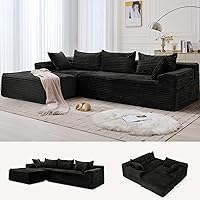
A modular sofa helps if you expect to rearrange the room. The Korser 110 L-Shaped Modular Sectional has 3 independent pieces, including an armless seat that can stand alone.
Choose the Korser for casual lounging and a layout you can change. Its 30.08 in deep seat and 14 in seat height favor a low, stretched-out sitting position; skip it if you want upright seating or find low seats hard to rise from.
Allow its vacuum-packed pieces 24–48 hours to expand before judging the final shape. The seat cushion covers aren't removable, so choose it only if you're comfortable caring for upholstery in place.
Read what a modular sectional is before assuming every sectional can switch sides or work as separate seats.
How much room should you leave around a sectional?
Plan for about 30–36 in along a main walking route and roughly 14–18 in between the seat edge and coffee table. These are planning starting points, so allow more space when your household needs it.
Measure from the furniture’s outer edge, including arms and chaise corners. A gap that looks wide from above can feel tight where two corners meet.
Walk the route carrying a laundry basket or tray. Check that someone can pass while another person sits with their feet on the floor.
Leave room to open drawers, cabinets, and doors fully. Follow clearance instructions for heaters and fireplaces, and keep exits clear.
If the sofa blocks the main route, change its position before shrinking every other gap. Separating suitable modules may help; our guide to how to separate a sectional couch explains what to check first.
How can you arrange a sectional in a small living room?
Start with a corner or wall-side layout, with the chaise pointing away from the doorway. This often leaves one larger patch of usable floor space instead of several narrow gaps.
Use only the modules the room can hold comfortably. An extra seat isn't useful if it blocks the route to the rest of the sofa.
A smaller round table can ease movement around a chaise corner. Nesting tables or a side table may work better when a coffee table would crowd the center.
Check the delivery route as well as the room footprint. Our guide to how to choose a sectional sofa covers the buying decisions to make before committing to a size.
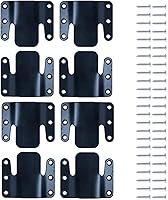
If pieces drift apart, see how to keep a sectional couch together. Match any added connectors to the sofa’s construction.
Should the sectional sit on a rug?
Use a rug large enough to connect the seating group visually, rather than placing a small rug beneath only the coffee table. Aim to place the front feet of the sectional and nearby chairs on it.
For floor-level modules, check how the rug edge sits beneath their bases. Avoid leaving a module tilted across a thick edge.
All 3 rugs below measure 8 x 10 ft. Tape out that rectangle first, with its longer side parallel to the main seating section, then compare the opposite direction.
Zomfy for a quiet backdrop
Choose the Zomfy if you want beige abstract pattern without making the floor the room’s main feature. It suits a sectional paired with patterned cushions or curtains.
Its polyester surface is machine washable, and Zomfy describes it as stain and spill resistant. Blot spills promptly rather than leaving liquid on the surface.
Skip it if you want thick padding underfoot. Its 0.3 in profile offers a slim floor covering, so don't choose it for a deep, cushioned feel.
Yarooge for a stronger floor pattern
Choose the Yarooge if your sectional and curtains are plain and you want brown abstract color blocks to define the seating zone. Skip it if the room already has several competing patterns.
The rug is machine washable but isn't water resistant, so blot spills right away. Yarooge advises laying it flat for 1–3 days after unpacking and specifically says to avoid heat, steam, and ironing.
SameBed for a vintage room
Choose the SameBed for a faded floral pattern that suits farmhouse, boho, or vintage decor. Skip it if you prefer crisp geometric shapes or a plain floor.
Its polyester surface is water repellent, and its care instructions call for cold machine washing without bleach. For routine vacuuming, use a brushless head on low power and work in one direction.
Before buying any washable rug, check your washer’s capacity and the rug’s care instructions. Rubber backing doesn't remove the need to check for sliding, raised corners, or trapped grit underneath.
Our sectional sofa dimensions guide can help you compare the sofa footprint with your planned rug placement.
How do you arrange a sectional in an open-plan room?
Use the back of the sectional as the living area’s boundary, with the seats facing inward. Keep the kitchen-to-dining or entry route outside the seating group.
Float the sofa only when the space behind it serves a purpose. A usable walkway works better than a narrow strip that collects clutter.
Keep the chaise from projecting into the busiest crossing point. If people repeatedly cut between the TV and sofa, shift the group or switch the chaise side.
A console behind the sofa can hold a lamp or small items, but include its depth in your measurements. Route cords away from walking paths.
What mistakes should you catch before moving the sofa?
Check the whole room in use, not just whether the sectional fits between walls. Door swings, occupied seats, and table access can reveal problems that an empty floor plan misses.
- Centering at all costs: move the sofa off-center if that creates a better path or view.
- Buying the rug first: settle the seating footprint before choosing its size.
- Blocking the chaise opening: leave a clear way to reach the inside corner.
- Ignoring cleaning access: make sure you can reach beneath or move the pieces as needed.
Tape out the sofa, rug, and tables together, then walk every regular route. Sit in a chair at the proposed seat position to check the view.
After moving the pieces, reconnect compatible built-in connectors and check that each section sits level. Our guide to how to connect a sectional couch explains the joining step.
Which sectional arrangement should you choose?
Choose a wall-side layout for limited floor space and a floating layout when the sofa can define an open living area while leaving a useful route behind it. Use a corner arrangement when it keeps both the entrance and center of the room clear.
When deciding how to arrange a sectional sofa, fix the walking route first, then choose the chaise side and rug position. If neither chaise direction works, reduce the seating footprint instead of forcing the room around it.
Before making the final move, check your measurements against our sectional sofa dimensions guide.
Frequently asked questions
Which way should a sectional face in a living room?
Face the main seats toward the focal point you use most, usually a TV, fireplace, or window. Keep the chaise outside the main walking route.
If the TV and fireplace sit on different walls, prioritize comfortable viewing from the seats used most often rather than forcing a centered layout.
Should a sectional go against the wall?
Place a sectional against a wall when that leaves more usable floor space and keeps the doorway clear. Float it when the room has enough space for a useful route behind it.
A narrow, unused gap behind the sofa adds little value, so choose placement around actual daily movement.
How do I choose the right chaise side?
Choose the chaise side that keeps doors and busy paths clear. Mark both possible arrangements on the floor before deciding, and check how the brand defines left-facing and right-facing.
Use a diagram rather than the name alone, since your viewing position can make the direction easy to misread.
What size rug works under a sectional?
Choose a rug that connects the sectional and nearby seats into one group, usually with their front feet on it. For floor-level modules, check how much of each base rests on the rug.
Tape out the rug dimensions first, since an 8 x 10 size won't suit every sectional.