Do Boneless Couches Hold Up?
Boneless couches can hold up for everyday lounging when their support and care needs fit your household. Foam recovery, cleanable upholstery, and suitable seat dimensions matter more than the boneless label, which doesn't promise a set lifespan.
On this page (8 sections)
- Do boneless couches hold up for daily use?
- How can you tell normal softness from lasting wear?
- Which boneless couch suits your household?
- What should you check before ordering?
- How should you set up a compressed boneless couch?
- What care habits reduce avoidable wear?
- Which mistakes lead to an early replacement?
- How should you decide whether boneless couches will hold up for you?
Boneless couches can hold up for everyday lounging, but foam recovery, upholstery care, and a suitable seat shape matter more than the style name. A couch that stays comfortable for evening movies may still be the wrong choice for all-day upright sitting.
If you're asking “do boneless couches hold up,” separate lasting wear from a poor fit. Low seats, deep cushions, and a plush feel can be intentional features rather than signs of weak construction.
Start with what a boneless couch is and whether cloud couches are worth it if you're still choosing a seating style.
Do boneless couches hold up for daily use?
Boneless couches can handle regular lounging, but the name doesn't establish how long any model will retain its shape. Match the construction to your household instead of expecting every foam-heavy couch to perform alike.
A single person reading each evening puts a different load on seating than a household sharing one couch throughout the day. Sitting in the same corner also concentrates wear, even when the remaining seats look nearly new.
Judge durability by continued usefulness: cushions should recover, seams should remain intact, and the layout should stay usable. A modular sectional guide can help you compare the layout features alongside those needs.
Which boneless couch features help it hold up?
Foam construction and practical care options are useful starting points, but firmness and density describe different things. A firm cushion isn't automatically longer-lasting, and a soft cushion isn't automatically worn out.
Terms such as high-density and high-resilience don't establish a measured lifespan. None of these 3 couches has enough durability information here to justify a promise of several specific years.
Look for removable upholstery if spills are likely, and ask about replacement parts before buying. Movable modules help with layout changes, but they don't mean every cushion can be flipped or swapped.
How can you tell normal softness from lasting wear?
A lasting dip matters more than temporary compression after someone stands up. Inspect the seat after it has been empty for several hours, then compare it with a less-used section.
Check the foam, cover, and module position separately. Wrinkled fabric may need smoothing, while a shifted cushion needs repositioning; neither proves that the foam underneath has failed.
Warning signs include a hollow that remains, torn seams, or a back cushion that no longer holds a useful position. Take photos of sudden changes so you can show the brand what happened.
Sections sliding apart are a separate problem from foam wear. Our guide to keeping a sectional couch together explains ways to address movement without assuming the seating needs replacement.
Which boneless couch suits your household?
Choose Korser for flexible seating, Mangodan for compact plush lounging, or Hobestluk for washable upholstery and a firmer feel. These are differences in fit and upkeep, not a ranking of proven lifespans.
Korser: for households that change the seating layout
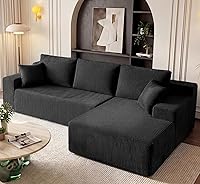
The Korser suits people who want to separate an armless seat for guests or change their lounging arrangement. Its medium feel and 30.08 in seat depth favor relaxed sitting, while side pockets give remotes a place to stay.
Korser uses high-density, high-elastic foam and says its corduroy resists wear and light scratches. Treat that fabric as upholstery to protect, rather than permission to let pets claw it.
Skip it if easy laundering is essential, since the seat cushion covers don't come off. Its 14 in seat height also deserves attention if you prefer higher seating or find low chairs hard to leave.
The supplied dimensions differ between 106.3 and 110 in wide. Confirm the exact size before ordering, especially if the couch must fit tightly between other furniture.
Mangodan: for small rooms and soft reclining
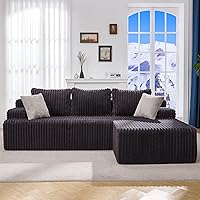
The Mangodan is the compact choice here at 80 in wide and 59 in deep. Its legless shape, deep seats, and soft-to-plush firmness suit people who want to curl up rather than perch upright.
Corduroy covers the high-density foam cushions, and added bolster pillows provide another way to position yourself while reclining. The modular layout lets you change the arrangement as room needs change.
Skip it if you want a firm seat for reading upright or frequent meals. Its seat covers aren't removable, so a household with regular food spills should weigh the cleaning demands carefully.
Hobestluk: for washable covers and firmer lounging
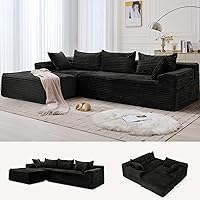
The Hobestluk is the strongest fit here when washable upholstery is a priority. It combines 2 oversized L-shaped chaise pieces with removable back cushions, a neck pillow, and a firm feel.
Its 96 by 61.5 in footprint needs room planning despite the flexible layout. The anti-slip bottom addresses movement, though you'll still need to position the pieces carefully on your floor.
Skip it if you want a shallow, upright sofa or lack space for deep chaises. Also, don't assume the boneless name means foam-only construction: its materials include engineered wood and plastic legs.
For more choices, compare our best boneless couches and best modular sectionals.
What should you check before ordering?
Check fit, cleaning access, and return terms before cushion softness. A couch that blocks a walkway or demands care you won't manage is a poor long-term choice, even if its foam stays comfortable.
Tape the full footprint onto your floor, including the chaise. Use our sectional sofa dimensions guide to plan clearance around doors, tables, and walking routes.
Seat depth and seat height matter separately from overall size. If you sit with your feet on the floor, compare the measurements with a chair you already find comfortable.
Check any stated weight limits and ask about return shipping, packaging requirements, and cushion coverage. A vacuum-packed couch expands after opening, so returning it may involve more work than putting it back in its original box.
How should you set up a compressed boneless couch?
Allow the full expansion period before judging shape or firmness. Korser calls for 24–48 hours, while Hobestluk calls for about 2 to 3 days and gentle patting after unpacking.
Clear the intended floor space before opening the packaging. Keep sharp blades away from the fabric, remove the wrapping carefully, and follow the brand's unpacking directions.
Don't assume Mangodan has the same recovery schedule as either alternative. Follow its included instructions, and avoid heat or force intended to speed up expansion.
Once the pieces have recovered, arrange them on a clean, dry surface. Check that the backs face the intended direction and the modules sit evenly before deciding a section is misshapen.
What care habits reduce avoidable wear?
Spread use across compatible seats and clean according to the fabric instructions. Changing your usual sitting spot is simpler than trying to repair a deep hollow later.
Vacuum crumbs and debris with a suitable upholstery attachment, paying attention to seams and corduroy ribs. Remove pet hair gently rather than scrubbing the fabric hard.
Blot spills promptly and avoid soaking the foam underneath. A cover that looks dry on top can still leave moisture inside, so let cleaned areas dry fully before normal use.
For Hobestluk's washable cover, follow the care label's wash and drying directions. Don't extend that permission to the other couches or assume every removable piece can go into a machine.
Avoid jumping, standing on the seats, or dragging modules by their cushions. Move pieces by supporting the base, and rotate cushions only if their shape and construction allow it.
Which mistakes lead to an early replacement?
Buying the wrong seat feel and ignoring early damage can shorten a couch's useful life in your home. Neither problem is solved by choosing a bigger couch.
Don't buy deep, plush seating while expecting the posture of an upright chair. Extra pillows can adjust your position, but they won't turn a low lounge couch into a different seat design.
Don't keep rearranging a damaged module or cover to hide a growing tear. Address loose seams early, and ask the brand about repairs before the opening spreads.
Finally, don't confuse washable covers with replaceable foam. Cleaning helps the upholstery; it won't rebuild a cushion that has permanently lost its shape.
How should you decide whether boneless couches will hold up for you?
To decide whether boneless couches hold up for your home, choose the care routine and sitting style you can live with every day. Pick Korser for separate seating pieces, Mangodan for compact plush lounging, or Hobestluk for washable covers and a firmer feel.
Choose another sofa style if low, deep seating makes getting up or sitting upright difficult. Our sectional sofa buying guide covers the broader choices.
Replace a couch when lasting cushion changes or damage make it uncomfortable or impractical, after checking repair options. For help turning your room measurements and daily habits into a shortlist, use how to choose a sectional sofa, then revisit the boneless couch guide to confirm the style fits.
Frequently asked questions
Do boneless couches sag over time?
Boneless couches can develop lasting dips as foam ages, especially where someone sits every day. Check whether the seat recovers after several unused hours, and distinguish compressed foam from loose fabric or shifted cushions.
Changing seats can spread wear, but it won't restore foam that has permanently lost support.
How long does a boneless couch last?
There is no reliable lifespan for every boneless couch. Foam construction, household use, and care differ too much to promise a fixed number of years from the style name alone.
Before buying, check return terms, coverage for cushion problems, and whether replacement covers or cushions are available.
Are boneless couches good for everyday use?
Boneless couches can suit everyday lounging if their height, depth, and firmness fit the people using them. Deep, plush seats favor reclining, while upright sitting may call for a firmer surface.
Anyone who finds low chairs difficult to leave should check seat height carefully before choosing this style.
Can you make a boneless couch last longer?
You can reduce avoidable wear by following the care instructions, cleaning spills promptly, and spreading use across compatible seats. Let compressed cushions expand fully before judging their shape, and avoid jumping or standing on them.
These habits help manage wear, but they cannot prevent normal foam aging.