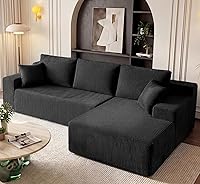
What Is a Boneless Couch?
A boneless couch is a sofa that gets much of its shape from foam cushions rather than a traditional rigid frame. Many have low seats and movable sections, but the name doesn't guarantee fully frame-free construction.
On this page (9 sections)
- What is a boneless couch made of?
- How is a boneless couch different from a regular sofa?
- Are boneless couches modular?
- What should you measure before buying a boneless couch?
- Is a boneless couch comfortable for everyday use?
- How do you set up a compressed boneless couch?
- How do you care for a boneless couch?
- Do boneless couches hold up over time?
- What is a boneless couch, and should you choose one?
A boneless couch is a sofa shaped mainly by foam cushions rather than a traditional rigid frame. Many have low seats and movable sections that suit casual lounging.
The name doesn't guarantee that every part is frame-free, that the covers are washable, or that the chaise reverses. Choose by how you'll sit, how the pieces fit your room, and how you'll clean them.
What is a boneless couch made of?
A boneless couch usually uses foam to form much of the seat, back, and sides. Some models add springs or other support parts, so the term describes a style of construction rather than one fixed recipe.
Foam firmness and seat shape matter more than words such as “cloud” or “plush.” A deep cushion can feel inviting for reclining while leaving a shorter person sitting forward without back support.
What does boneless couch construction change for you?
It makes seat height, cushion shape, and edge support especially important. If you push on an armrest to stand up, choose a design with a stable support surface rather than assuming a padded foam side will serve that purpose.
The Mangodan Boneless Cloud L-Sectional suits someone who wants an armless lounging area. Its legless design, deep seats, and bolster pillows favor stretching out over formal upright seating.
At 80 inches wide, it's the narrower option among the models here with clear overall widths. Its 59-inch depth still needs careful planning, so skip it if that footprint crowds your walkway or you need firm armrests.
For the difference between soft construction and movable sections, see what a modular sectional is.
How is a boneless couch different from a regular sofa?
A traditional sofa generally supports its seating with a rigid frame, while a boneless couch gets more of its form from cushions. That changes which details you should compare before buying.
| Detail | Boneless couch | Traditional sofa |
|---|---|---|
| Main structure | Often foam-led, sometimes with added supports | Usually built around a rigid frame |
| Sitting position | Often low and deep | Available in many heights and depths |
| Layout | May have separate movable sections | Can be fixed or modular |
| Setup | Compressed models need recovery time | May need legs or frame parts attached |
| Care | Depends on fabric and cover design | Depends on fabric and cover design |
Neither style guarantees comfort or easy cleaning. A traditional sofa can have soft cushions, and a boneless couch can contain springs.
“Cloud” describes a soft, relaxed style rather than a specific internal structure. Read are cloud couches worth it? if you're deciding how much softness you want for daily sitting.
Are boneless couches modular?
Many are modular, but boneless describes construction and modular describes layout. Separate sections let you change the arrangement only within the limits of their shape, arms, and chaise direction.
Don't assume movable pieces make a chaise reversible. Picture each section on its own and check where its back and arms would sit in your preferred arrangement.
The Chorlenimi Boneless Cloud Sectional suits readers and movie watchers who prioritize cushioning behind the back and shoulders. It pairs a high backrest with spring support and high-density foam filling.
Its overall width is 96.1 inches, so skip it if you need a compact replacement for a small loveseat. Buyers who want firm seating should also look elsewhere, since its stated firmness is soft.
For more layout examples, read what a modular sectional is. Count the included pieces before choosing a floor plan, since “modular” doesn't promise unlimited arrangements.
What should you measure before buying a boneless couch?
Measure the room, usable seat, and delivery route before choosing. Overall width alone won't tell you whether your feet reach the floor or whether a chaise blocks a door.
Start with a sofa or chair you find comfortable. Measure from the floor to its seat and from the front edge to the back cushion, then compare those numbers with the couch you're considering.
- Mark the footprint. Use painter's tape to show the couch outline, including the chaise, and walk around it.
- Leave working space. Open nearby doors and drawers, and check the route between the couch and other furniture.
- Check the route inside. Measure doorways and tight turns, using package dimensions for delivery and module dimensions for later moves.
- Separate seat depth from overall depth. Back cushions and arms use some of the total space.
- Confirm chaise direction. Match the stated orientation to the view facing the sofa.
Our sectional sofa dimensions guide explains which measurements affect room fit.
The Yomsum 96 Boneless Cloud Sectional suits buyers who want two pieces that can separate for seating and reconnect for lounging. Built-in connectors help keep the sections aligned, while a side pocket holds small items.
Its 26.8-inch seat depth and 16.1-inch seat height favor a low lounging position. Skip it if getting up from a low seat is difficult or you prefer sitting upright with your feet directly beneath you.
If sections drift apart, check their alignment and connection method first. Our guide to keeping a sectional couch together covers practical ways to address gaps.
Is a boneless couch comfortable for everyday use?
A boneless couch can work for daily use when its seat position matches your main activity. Choose for the way you spend most of your time, rather than the occasional afternoon nap.
For conversation or reading, you should be able to rest against the back without sliding far forward to support your feet. For reclining or sitting cross-legged, extra depth can be useful.
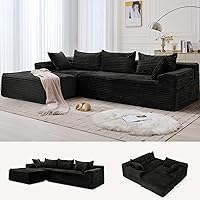
The NMXUXMN Boneless Modular Sectional suits people who want thick back cushions and wide padded armrests around a lounging space. Its sections can form an L-shaped sofa or chaise arrangement.
The extended chaise sits on the left when you face the sofa. Skip it if your room needs a right-side chaise, and confirm its full assembled footprint before ordering because its supplied dimensions don't clearly resolve the complete layout.
A lounge arrangement also isn't automatically a sleeper sofa. If overnight guests are the priority, choose around the usable sleeping surface rather than assuming any deep couch works as a bed.
How do you set up a compressed boneless couch?
Set up a compressed couch in its intended room, then give the foam its full recovery time. No assembly doesn't mean the couch reaches its final shape as soon as the wrapping comes off.
Clear enough floor space to spread out the modules. Open packaging carefully, keeping sharp tools away from the upholstery, then gently pat and reshape the cushions as directed.
Yomsum gives a 24–48 hour recovery range in its unpacking guidance and allows up to 72 hours for full expansion. NMXUXMN also allows up to 72 hours, so don't schedule either arrival just before guests need seating.
Keep the care and setup instructions until everything has recovered. If a section remains uneven after the stated period, contact support before trying heat, steam, or other reshaping methods.
How do you care for a boneless couch?
Use regular dry cleaning and the fabric's care instructions to manage crumbs, hair, and spills. None of these 4 couches has removable seat cushion covers, so plan for cleaning the upholstery in place.
Yomsum recommends a vacuum, lint roller, or soft brush for routine care. For other models, check the care directions before choosing an attachment or cleaner, especially around corduroy's raised ribs.
Blot spills promptly rather than rubbing them across the fabric. Avoid soaking the foam, and let cleaned areas dry fully before covering or using them.
A removable back cushion doesn't mean its cover is washable. If machine-washable seat covers are essential for your household, skip these options and choose a couch that explicitly provides them.
Do boneless couches hold up over time?
Longevity depends on foam quality, construction, care, and use. “High-density foam” alone doesn't establish how long a couch will retain its shape, especially without a numeric density to compare.
Avoid repeatedly perching on the same soft edge, and reshape loose cushions as the care instructions allow. Check connectors when rearranging sections rather than dragging joined pieces across the floor.
Before buying, check the return process for expanded furniture and whether replacement parts are available. For a fuller look at wear and cushion changes, read do boneless couches hold up?.
What is a boneless couch, and should you choose one?
A boneless couch makes sense when low, cushioned seating fits your everyday routine. Choose Mangodan for an armless lounge, Chorlenimi for its higher backrest, Yomsum for connected two-piece seating, or NMXUXMN for padded arms and a left-facing chaise.
Choose another sofa style if you need a taller seat, firm arms for standing, or removable seat covers. Set those requirements before comparing looks.
Once you've settled on your seat height and layout, browse the best boneless couches for specific options. The modular-cloud guide covers related couch styles if you're still deciding.
Frequently asked questions
What does boneless mean in a couch?
Boneless describes a couch that gets much of its shape from foam cushions rather than a traditional rigid frame. It isn't a fixed construction standard, so a model can still contain springs or other support parts.
Compare the materials, seat height, and module design before choosing one.
Are boneless couches comfortable?
Boneless couches can suit lounging, especially if you like deep seats and a cushioned feel. For upright sitting, seat height and usable depth matter as much as softness.
Compare those measurements with a comfortable chair at home, and check that you can reach the back cushion without losing foot support.
Do boneless couches need assembly?
Some need no tools or frame assembly, but compressed modules still need unpacking, reshaping, and recovery time. Follow the instructions for your model rather than assuming every couch expands at the same rate.
Place the pieces in the intended room before opening them and allow the full recovery period.
Can you rearrange a boneless couch?
Many boneless couches have movable sections, but the number of pieces limits the layouts you can create. A two-piece couch offers fewer arrangements than a system with several separate seats.
Check chaise direction, arm placement, and connectors before assuming you can reverse the whole sofa or add more sections later.